YouTube Is a Wonderful Babysitter. That's the Problem.
A reader asked me why KidDOS exists. The honest answer starts with a three-year-old, a stack of paperwork, and two hours of car videos. Part one of three.
Under the KidDOS post, a reader asked the obvious question: why? Kids today have YouTube, Roblox, and everything else. Why build them a fake computer from 2001?
The answer got long. This is the first of three parts.
The babysitter
I don’t know how it is where you live. Where I live, people have started looking sideways at the whole YouTube-and-Roblox world. Not everyone. But I see a lot of parents who have quit it.
YouTube is a wonderful means of calming a child. Truly. But if you have ever once seen a kid who has been sitting in front of it for six hours straight, you have seen a fairly depressing sight. And if that sitting stretches over months and years, it turns into a complete wreck. I have real examples among my neighbors: parents who could not feed their child unless YouTube was on.
We went through it ourselves. A pile of moves, a pile of moments when the paperwork had to be filled out right now, and the three-year-old “had” to be parked in front of YouTube for two or three hours at a stretch. And no matter how hard you try, the most wonderful channel on YouTube ends up sliding into the same place: brightly colored cars, one after another, forever.
At first glance those look like “educational videos.” Put a child in front of the TV for a couple of hours and you find out very quickly that there is nothing educational in there at all. The genuinely educational videos for a three-year-old were David Attenborough and National Geographic. This other stuff, this brain-milking, ends with the child tearfully begging for just two more hours of cars.
It isn’t a conspiracy
This is not conspiracy talk, and there are no lizard people hypnotizing the population. It is nothing more than algorithm maximization. Some guys in Bangladesh put a channel together, cranked out an endless stream of identical videos, and collect their miserable five hundred bucks a month. Only in Bangladesh that is decent money. And those guys could not care less what the child sees, how, or what becomes of him afterwards.
I know this honestly, from the inside. I run an Instagram channel that does a million views a month, and I am growing my YouTube right now. How the machine actually promotes a video, and what that means for a kid, is the second part.
Getting off the needle
So by the age of four we had taken the kid off the needle of watching that stuff all day.
Here is his daily YouTube at seven:
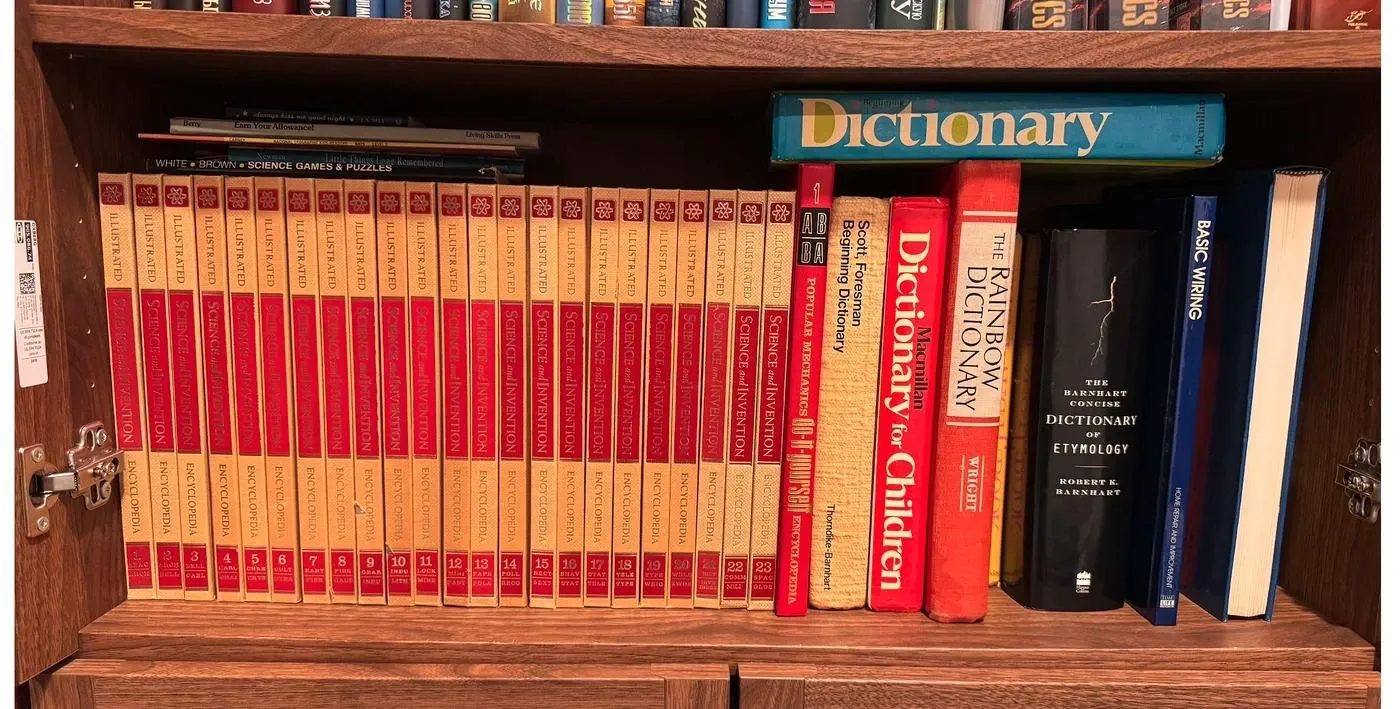
My son gets about forty minutes of YouTube a week. Actual YouTube. Which is why he chooses what to watch more responsibly than most adults. In practice he mostly watches Mark Rober.
Plus a couple of feature-length cartoons on the weekend. Sometimes we go to the movies, but that’s rare.
Yes, we live in a country where this is normal:
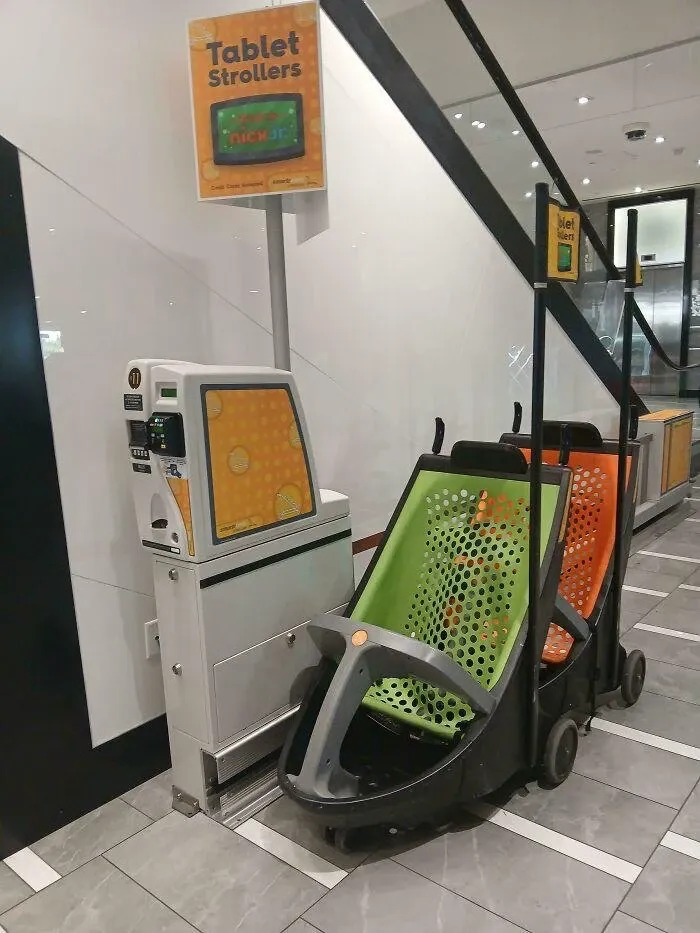
A stroller with a built-in iPad. Rent by the hour, credit cards accepted.
So the boredom, and the complete absence of any Roblox, had to be created artificially. And it worked well enough. At seven the kid reads books for fun and knows how to use a dictionary. Better still, when he goes to school he is already able, on his own, to drink nothing but plain water and not hang around the iPads.
That is the “why”, first half. The second half is about what a browser is in 2026, and why letting a child into it is not the same thing it was when I was learning. Part two: the thousand-view wall.
Comments
Comments live in the project's GitHub Discussions. Sign in with GitHub below, or open the discussion on GitHub.